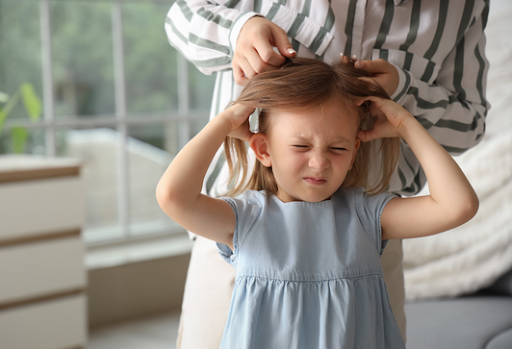
Here’s the good news: lice are treatable. They don’t carry disease, they don’t mean your house is dirty, and in most cases you don’t need a prescription. What you do need is the right lice shampoo for kids, the right technique, and a little patience. This guide walks you through all of it.
Key Takeaways
- OTC lice shampoos (pyrethrin or permethrin) work for most kids — but resistance is real, and prescription options are available if two rounds of treatment aren’t doing the job.
- The comb-out is not optional. No shampoo reliably kills 100% of nits. Manual removal is what prevents the cycle from repeating.
- Plan for a second treatment around day 9. Nits that survived the first round hatch within 7–10 days. One-and-done rarely works.
- You don’t need to deep-clean your house. Lice die within 24–48 hours off a scalp. Hot-wash bedding and bag plush toys — that’s really it.
- Kids can go back to school after the first treatment. The AAP doesn’t support “no nit” policies. A few remaining nits aren’t a reason to keep them home.
- Prevention is mostly about habits, not sprays. No sharing brushes or hats, hair worn up at school, and weekly checks go further than any over-the-counter repellent product.
First: What You’re Actually Dealing With
Head lice (Pediculus humanus capitis) are tiny, wingless insects that live on the human scalp and feed on small amounts of blood. They can’t jump or fly — they spread almost exclusively through direct head-to-head contact. The idea that lice jump from jacket to jacket on a coat hook isn’t really how it works in practice, though sharing combs, helmets, and hair accessories can occasionally be a factor.
You might be dealing with one of three things:
- Live lice — sesame seed-sized, tan or grayish, and they move quickly. This is what confirms an active infestation.
- Nits — lice eggs, cemented to the hair shaft close to the scalp. They look like tiny white or yellowish-brown dots and don’t slide off the hair the way dandruff does. They’re easier to find than live bugs.
- Empty nit casings — these are white and further from the scalp. Finding only these, with no live bugs, may mean the infestation is old and resolved.
The most common symptom is itching — especially at the nape of the neck and behind the ears — but some kids don’t itch much at all, particularly early on. A thorough check under good lighting, going section by section with a fine-tooth comb, is the only reliable way to know for sure.
Choosing a Lice Shampoo for Kids: OTC Options Explained
For most kids, an over-the-counter (OTC) lice shampoo is the right starting point. There are two main active ingredients you’ll see on store shelves:
Pyrethrin (e.g., RID)
Pyrethrin is derived from chrysanthemum flowers and has been used to treat head lice for decades. It kills live lice on contact but does not reliably kill unhatched nits — which is exactly why retreatment is necessary. Because any nits that survive the first round will hatch within 7–10 days, a second treatment roughly 9 days after the first is the standard recommendation.
One important note: pyrethrin is derived from chrysanthemums, so if your child has a known allergy to ragweed or chrysanthemums, check with your doctor before using it.
Permethrin (e.g., Nix)
Permethrin is a synthetic version of pyrethrin and is generally considered safe for children 2 months and older. Like pyrethrin products, permethrin kills live lice but has limited effect on nits. Same deal: plan on a second treatment around day 9.
Both of these work well when used correctly. The issue is that “correctly” involves more than just applying the shampoo — and that’s where a lot of treatments fall short.
A Note on Resistance
Permethrin and pyrethrin resistance has been documented in lice populations in many parts of the United States, and some research suggests it’s fairly widespread. If you’ve treated twice with the same OTC product and you’re still finding live lice 2–3 days after each treatment, resistance may be the issue — not user error. That’s when it makes sense to call your doctor.
How to Actually Use Lice Shampoo (The Part Most People Rush)
Read the label for your specific product, but here’s the general approach that holds for most OTC lice shampoos:
- Skip the conditioner beforehand. Conditioner can coat the hair shaft and reduce how well the treatment penetrates. Same goes for combination shampoo-conditioner products.
- Apply to dry or slightly damp hair, not soaking wet. Wet hair can dilute the product.
- Cover the entire scalp, especially behind the ears and along the nape of the neck. These spots are where lice prefer to hang out.
- Leave it on for the full recommended time. Rushing through this step is one of the most common mistakes.
- Rinse over a sink, not in the shower or bath — this helps avoid spreading the product to other parts of the body.
- Don’t shampoo again for 1–2 days after treatment. Some residual product on the hair shaft continues to work.
After rinsing: don’t skip the comb-out. This is not optional.
Nit Removal: The Step That Determines Whether Treatment Works
Here’s something worth understanding: no OTC lice shampoo reliably kills 100% of nits. Even products that claim to — read the fine print. That means the physical removal of nits through careful combing is what actually closes the loop on treatment. If nits are left behind and hatch, you’ll have a new generation of lice in 7–10 days, and it won’t look like the treatment failed — it’ll look like reinfestation.
The comb-out process isn’t complicated, but it is time-consuming:
- Work in small sections under bright light — a lamp works better than overhead lighting
- Use a quality metal lice comb (the plastic ones that come in kits are often not fine enough)
- Adding a small amount of olive oil or regular conditioner to damp hair makes combing through easier and slows lice down slightly
- After each pass, wipe the comb on a damp paper towel to check for nits or bugs, then dip the comb in rubbing alcohol before the next section
- Plan on repeating this comb-out every 2–3 days for the next 10–14 days, even after retreatment
Put on a movie. This takes a while, especially for kids with long or thick hair. Consider it mandatory.
Prescription Options: When OTC Isn’t Cutting It
If you’ve done two rounds of OTC lice shampoo correctly and are still finding live bugs 48–72 hours after the second treatment, it’s time to call your doctor. Prescription treatments work differently from OTC products and aren’t affected by the resistance issue:
- Spinosad (Natroba) — kills both lice and nits, and a second treatment is often not needed. Approved for children 6 months and older.
- Ivermectin (Sklice) — a single-dose topical lotion that kills lice and makes it harder for nits to hatch. Approved for children 6 months and older.
- Malathion (Ovide) — highly effective but flammable (it’s alcohol-based), so it comes with some specific precautions. Used for ages 6 and up.
- Benzyl alcohol (Ulesfia) — suffocates lice by blocking their spiracles. Approved for ages 6 months and older, requires two treatments.
Your doctor can also advise on whether oral ivermectin makes sense in complicated cases, particularly when topical treatments have repeatedly failed.
What About the House?
This is where a lot of parents exhaust themselves unnecessarily. Head lice cannot survive off a human scalp for more than 24–48 hours. They don’t infest furniture, they don’t live in carpets long-term, and they are not a sign that your home is dirty.
What’s actually worth doing:
- Wash bedding, clothing, and towels used in the 48 hours before treatment in hot water and dry on high heat
- Soak combs and brushes in hot water (above 130°F) for at least 10 minutes, or put them through the dishwasher
- Items that can’t be washed — stuff animals, hats — can go in a sealed plastic bag for 2 weeks or be placed in a dryer on high for 30+ minutes
- A quick vacuum of furniture and floors is fine, but deep cleaning is not necessary
Do not use fumigant sprays or foggers on your home. The American Academy of Pediatrics specifically advises against these — they’re not effective against lice and they introduce unnecessary chemical exposure in your living space.
School, Siblings, and Everyone Else
Current guidance from the American Academy of Pediatrics is that children do not need to be kept home from school once treatment has begun — even if there are some remaining nits. “No nit” policies are not supported by evidence and are no longer recommended by most major medical organizations. That said, school policies vary, so check with your school.
Check all household members for lice when one child has them. If you find active infestation in anyone else, treat them the same way. Close contacts outside the home (especially kids who’ve had sleepovers recently) are worth a heads-up — just a quiet word to the parents, not a public announcement.
Preventing Lice: What Actually Helps
There’s no foolproof way to prevent lice, but a few habits make a real difference:
- Teach kids not to share combs, brushes, hats, helmets, and hair ties. This is probably the single most useful prevention habit.
- Long hair worn up (braid, ponytail, or bun) during school reduces the chance of hair-to-hair contact.
- Weekly hair checks — especially during the school year and after sleepovers — let you catch an infestation early, before it spreads.
- Teach kids to store coats and hats inside their backpack rather than hanging them on shared hooks at school.
There are tea tree oil sprays and “lice repellent” products marketed for prevention. Some parents swear by them; the clinical evidence for their effectiveness is modest at best. They’re unlikely to hurt anything, but they shouldn’t be your only strategy.
When to Call Your Doctor
Most lice cases can be managed at home. But give us a call if:
- You’ve completed two full rounds of OTC treatment and are still finding live lice after the second one
- Your child is under 2 years old (some products aren’t approved for this age group)
- You’re seeing scalp sores, crusting, or signs of secondary skin infection from scratching
- Your child has a known allergy to ragweed or chrysanthemums and you’re unsure what products are safe
- You’re just not sure if what you’re seeing is actually lice — it’s worth a quick visit to confirm before starting treatment
Lice are manageable. The parents who struggle most with them are usually ones who either skipped the comb-out step, didn’t retreat, or used a product that lice in their area have developed resistance to. Get the technique right and most families are clear within two to three weeks.
More Information
For more on diagnosis and treatment, the American Academy of Pediatrics’ head lice resource page is one of the better reference points available and is updated regularly.
Have questions about care for your little one? We’re here to help — contact us now!